Human Genetics and Hematology
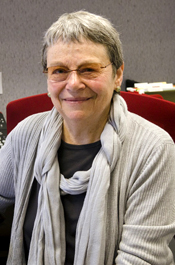
Dr. Auerbach's research has focused on Fanconi anemia (FA), a genetically heterogeneous recessively inherited syndrome characterized by developmental abnormalities, life-threatening bone-marrow failure and predisposition to a variety of cancers, particularly acute myelogenous leukemia and squamous cell carcinomas. When she joined Rockefeller University in 1982 she founded the International Fanconi Anemia Registry (IFAR), which has been maintained at Rockefeller since that time, providing researchers who study Fanconi anemia access to a large number of patients with diverse features of this rare disease. The IFAR aims to elucidate clinical and genetic features in Fanconi anemia to better define this heterogeneous disorder and differentiate it from other syndromes with overlapping features. In addition, Auerbach is the curator for the "Locus Specific Database" (LSDB) for Fanconi anemia, a compendium of all known genetic variants associated with pathology in Fanconi patients.
Although the pathophysiology of Fanconi anemia is not well understood, Dr. Auerbach's research demonstrated that hypersensitivity to the DNA cross-linking agent diepoxybutane can be used as a cellular marker for the disease, facilitating prenatal as well as postnatal diagnosis. The work on the prenatal diagnosis of Fanconi anemia played a major role in the use of this syndrome as a model for the development of umbilical cord blood transplantation as an alternative to bone marrow transplantation in the treatment of hematologic disorders. The first human cord blood transplant was in a Fanconi patient in 1988; the patient is still alive and well after more than 20 years.
As part of a consortium effort, Dr. Auerbach and her colleagues identified the gene for complementation group A (FANCA), which accounts for 65 percent of Fanconi anemia cases. More recently Dr. Auerbach and her colleagues have played a major role in the identification of FANCJ/BRIP1, FANCN/PALB2 and FANCI. Current research focuses on identification of additional genes in IFAR patients that cause Fanconi anemia, as there are still IFAR patients for whom all known Fanconi genes have been ruled out.
The Fanconi anemia genes all encode unique proteins, most of which do not exhibit any known functional domains; these may thus represent a new class of genes associated with the maintenance of genomic stability. Among the fifteen Fanconi proteins that have been identified, BRCA2 (FANCD1), PALB2, BRIP1 and RAD51C are known to predispose heterozygous carriers to breast cancer. Through the IFAR, Dr. Auerbach's lab obtained tissue samples and established cell lines from over 600 research participants with various Fanconi anemia subtypes. This IFAR cell repository should be very valuable for future studies to understand the role of the Fanconi genes in cancer.
Currently, Dr. Auerbach is active on the International Scientific Advisory Board of the Human Variome Project (HVP). The vision of the Human Variome Project is to be a catalyst for reduction in human disease in the 21st century by facilitating the establishment and maintenance of standards, systems, and infrastructure for the worldwide collection and sharing of all genetic variations effecting human disease. To ensure the complete capture of all human genetic variation, the HVP is focused on collecting information through two separate, yet complementary, channels: country specific collection and gene/disease specific collection. The sharing of information on genetic variation and its consequences allows existing treatments to be delivered more effectively to patients and new treatments and cures to be developed. Auerbach’s vision in founding of the IFAR in 1982 and the Fanconi Anemia Mutation Database in 1997 continues to provide an ongoing resource for the international FA genetics research community, compatible with the mission of the HVP.
CAREER
Dr. Auerbach received her bachelor’s degree from William Smith College in 1957, her M.A. from Columbia University in 1958, and her Ph.D. from New York University in 1977. Following a postdoctoral fellowship in the laboratory of Dr. Raju Chaganti at Memorial Sloan-Kettering Cancer Center, and a position as Research Associate in that laboratory, she joined Rockefeller University in 1982 as an Assistant Professor in the Laboratory for Investigative Dermatology, and she has been at the university since. She was promoted to Associate Professor in 1989, and following the death in 1993 of Dr. D. Martin Carter, Head of the Laboratory for Investigative Dermatology, she became the Director of the Program in Human Genetics and Hematology. Dr. Auerbach is the recipient of numerous awards during her career at Rockefeller, including the Basil O'Connor Starter Research Award of the March of Dimes Birth Defects Foundation, MERIT Award of the National Heart, Lung, and Blood Institute, and Lifetime Achievement, Discovery and Founder Awards from the Fanconi Anemia Research Fund. In 2006 Auerbach was appointed as a Fellow of the American Society for the Advancement of Science (AAAS).